
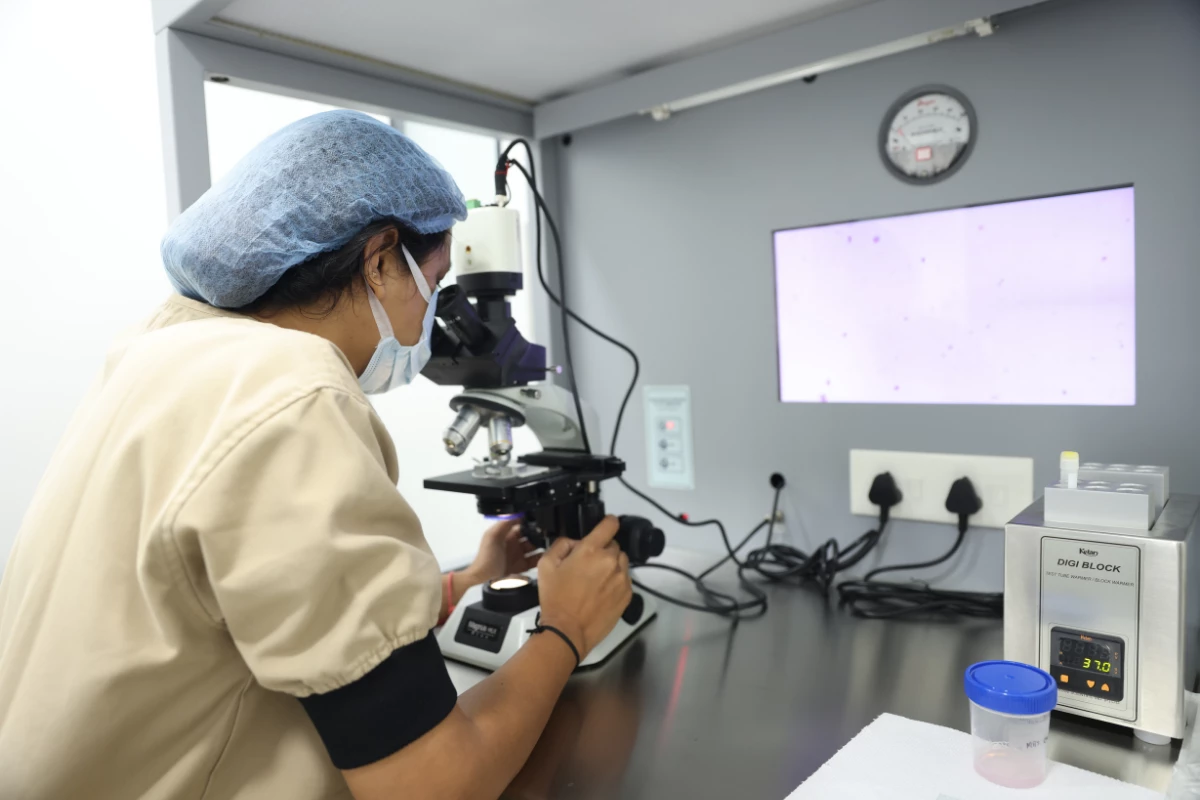
Altos Labs has emerged as a significant player in the burgeoning field of longevity research, attracting substantial investment from high-profile individuals, most notably Jeff Bezos. This cellular rejuvenation startup is focused on understanding and potentially reversing the processes of aging at a fundamental biological level, aiming to extend healthy human lifespan. The company’s approach centers on reprogramming cells to a more youthful state, a concept that has generated both excitement and skepticism within the scientific community and the general public.
Altos Labs: A New Frontier in Longevity Research
Altos Labs operates with a distinct mission: to unravel the biological mechanisms of aging and translate that understanding into therapies that restore cell health and resilience. Unlike many traditional pharmaceutical companies that target specific diseases, Altos Labs aims to address aging itself as a root cause of various age-related conditions. The company’s strategy involves recruiting top scientists from diverse fields, providing them with significant funding, and fostering an environment of collaborative, long-term research free from immediate commercial pressures.
The core scientific premise driving Altos Labs is cellular reprogramming, a Nobel Prize-winning discovery by Shinya Yamanaka. Yamanaka’s work demonstrated that mature cells can be reprogrammed back into an embryonic-like state (induced pluripotent stem cells, or iPSCs) by introducing specific genetic factors, often referred to as “Yamanaka factors.” Altos Labs is exploring how partial reprogramming – a controlled, less aggressive application of these factors – might rejuvenate cells and tissues without erasing their specialized functions or leading to uncontrolled growth.
This focus on partial reprogramming presents both practical implications and significant trade-offs. The potential benefit is the ability to reset cellular “age” markers, improving function and potentially mitigating age-related damage. For instance, imagine restoring the regenerative capacity of an aged organ or improving the function of immune cells that have become less effective with time. However, the challenge lies in precisely controlling this process. Full reprogramming is known to cause cells to lose their identity and can lead to teratomas (tumors). Partial reprogramming seeks a delicate balance: enough “reset” to rejuvenate, but not so much that it de-differentiates the cell or triggers uncontrolled proliferation. The research involves navigating this narrow window, understanding optimal exposure times, and developing delivery methods that are both safe and effective in living organisms.
The Quest for Immortality: Beyond Living Longer
The term “quest for immortality” often accompanies discussions around companies like Altos Labs, but it’s important to differentiate scientific goals from speculative aspirations. While extending human healthspan is a primary objective, achieving biological immortality, in the sense of never dying, remains firmly in the realm of science fiction. Altos Labs and similar ventures are focused on combating the decline associated with aging, aiming to add years of healthy, functional life, rather than simply extending lifespan regardless of quality.
The scientific community recognizes aging as a complex process involving multiple interconnected pathways, including genomic instability, telomere attrition, epigenetic alterations, loss of proteostasis, deregulated nutrient sensing, mitochondrial dysfunction, cellular senescence, stem cell exhaustion, and altered intercellular communication. Altos Labs’ approach, particularly through cellular reprogramming, aims to address several of these hallmarks simultaneously. By resetting cellular epigenetic clocks, for example, they hope to reverse some of the epigenetic alterations and improve cellular function across various tissues.
Consider the practical implications: if successful, this research could lead to treatments that delay the onset or severity of age-related diseases like Alzheimer’s, Parkinson’s, cardiovascular disease, and certain cancers. Instead of treating these conditions individually as they arise, the aim is to intervene earlier, at the level of the underlying aging process. This could significantly reduce the burden on healthcare systems and improve the quality of life for an aging global population. The trade-offs, however, involve the immense complexity of biological systems. Intervening in fundamental processes like cellular aging could have unforeseen systemic effects. Rigorous testing, long-term studies, and careful monitoring would be essential to ensure that any potential benefits outweigh the risks.
Meet Altos Labs: Silicon Valley’s Latest Wild Bet on Living
Altos Labs represents a significant investment by some of the world’s wealthiest individuals, including Jeff Bezos and Yuri Milner. This influx of capital has allowed the company to operate with a degree of freedom and ambition rarely seen in early-stage biotech. They’ve established research institutes in key scientific hubs like the San Francisco Bay Area, San Diego, and Cambridge (UK), attracting a roster of Nobel laureates and leading scientists in fields ranging from stem cell biology and epigenetics to bioinformatics and regenerative medicine.
This “wild bet” by Silicon Valley figures underscores a growing belief that aging is a malleable process, not an immutable fate. Historically, aging research has been underfunded relative to disease-specific research. The entry of billionaires with deep pockets and a long-term vision has shifted this paradigm, allowing for foundational research that might not yield immediate commercial returns but could have transformative impacts decades down the line.
The structure of Altos Labs is also notable. It’s set up as a public benefit corporation, which theoretically allows it to prioritize scientific discovery and public good over short-term profit motives, though it is still a for-profit entity. This model aims to provide researchers with the resources and intellectual freedom to pursue high-risk, high-reward science without the constant pressure to develop a marketable product within typical venture capital timelines. This approach has practical implications for how research is conducted: scientists are encouraged to share data internally, collaborate across disciplines, and focus on fundamental questions rather than siloed projects aimed at specific drug targets. The trade-off is the sheer scale of investment required and the inherent uncertainty of such ambitious biological research. There’s no guarantee of success, and the path to human therapies is likely to be long and fraught with challenges.
The Longevity Startup That Already Has the Data: Altos Labs and Its Foundations
While Altos Labs is a relatively new entity, its foundation rests on decades of prior research, particularly in the fields of stem cell biology and epigenetics. The “data” it possesses isn’t necessarily proprietary clinical trial results but rather the collective body of scientific understanding and the expertise of its recruited scientists. Many of the key researchers at Altos Labs have spent their careers generating the foundational data that makes cellular reprogramming and related longevity interventions seem plausible.
For example, the work on epigenetic clocks by scientists like Steve Horvath, who is associated with Altos Labs, provides a measurable way to track biological age. These clocks, based on DNA methylation patterns, suggest that biological age can diverge from chronological age and, importantly, that interventions can potentially reverse or slow down epigenetic aging. This kind of data provides a framework for understanding the mechanisms of aging and for evaluating the effects of potential therapies.
Consider the practical implications for drug development. Instead of blindly testing compounds, researchers at Altos Labs can leverage existing genomic and proteomic data, along with advanced computational models, to identify promising targets for intervention. They can use high-throughput screening of compounds for their ability to induce partial reprogramming or modulate specific aging pathways. The trade-off is that even with extensive foundational data, translating discoveries from petri dishes and animal models to humans is notoriously difficult. Human biology is incredibly complex, and interventions that work in mice may not translate directly. Furthermore, the ethical considerations surrounding genetic manipulation and cellular reprogramming in humans are substantial and require careful navigation.
To illustrate the different approaches and their potential impact, consider the following table comparing Altos Labs’ focus with more traditional pharmaceutical approaches to age-related conditions:
| Feature | Altos Labs (Longevity) | Traditional Pharma (Disease-Specific) |
|---|---|---|
| Primary Goal | Reverse or slow fundamental aging processes | Treat or manage specific age-related diseases |
| Target | Cellular health, epigenetic clocks, systemic rejuvenation | Specific disease pathways (e.g., amyloid plaques in AD) |
| Intervention | Cellular reprogramming, broad biological modulation | Targeted drugs, symptom relief, disease modification |
| Time Horizon | Long-term, foundational research, potentially decades | Shorter to medium-term, product-focused |
| Funding Model | Billionaire-backed, public benefit corporation | Venture capital, public markets, profit-driven |
| Risk Profile | High risk, high reward, transformative potential | Moderate risk, incremental improvements |
| Ethical Scope | Broad, societal implications of extending healthspan | Disease-specific ethics (e.g., drug access, side effects) |
What Do You Know About Altos Labs? Insights from the Biotech Community
Discussions within the biotech community about Altos Labs often highlight a mix of excitement, cautious optimism, and healthy skepticism. Scientists are intrigued by the sheer scale of investment and the caliber of talent assembled, recognizing the potential for groundbreaking discoveries when researchers are well-funded and given intellectual freedom. Many see it as a much-needed push for fundamental aging research.
However, there’s also a pragmatic awareness of the immense challenges. As seen in discussions on platforms like Reddit’s r/biotech, common questions revolve around the feasibility of safe and effective partial reprogramming in humans, the long-term side effects of such interventions, and the economic implications of widely available “age reversal” therapies. Some express concern that the hype surrounding longevity could outpace the scientific reality, leading to unrealistic expectations.
The practical implications of these community discussions are valuable for understanding the landscape. They temper the enthusiasm with a dose of realism, emphasizing the need for rigorous scientific validation, transparency, and ethical oversight. The edge cases discussed include the potential for treatments to be accessible only to the wealthy, exacerbating existing health inequalities, or the societal impact of a significantly older population. These considerations are not merely speculative; they are critical questions that Altos Labs and the broader longevity field will need to address as their research progresses. The biotech community generally agrees that while the goals are ambitious, the scientific approach, driven by top-tier researchers, is sound, even if the timeline to widespread human application remains uncertain.
FAQ
How much did Jeff Bezos invest in Altos Labs?
While specific figures are not publicly disclosed by Altos Labs or the investors, reports suggest that Jeff Bezos is a significant investor, with estimates of his contribution being in the hundreds of millions of dollars. The company launched with an initial funding of at least $3 billion.
Can stem cells reverse aging?
Stem cells themselves don’t directly “reverse” aging in the sense of making an old organism young again. However, stem cell therapies and related approaches, particularly those involving cellular reprogramming (which can generate induced pluripotent stem cells or iPSCs), hold promise for addressing age-related decline. The idea is that by replacing damaged cells or rejuvenating existing ones, the functional aspects of aging could be mitigated or even partially reversed at a cellular level. Research is ongoing into how partial cellular reprogramming, a technique distinct from full stem cell generation, might achieve this without the risks associated with undifferentiated stem cells.
What biotech company did Jeff Bezos invest in?
Jeff Bezos has invested in multiple biotech and longevity-focused companies. Most notably, he is a significant investor in Altos Labs, a company dedicated to cellular rejuvenation technology and understanding the biology of aging. He has also reportedly invested in Unity Biotechnology, another company focused on developing therapies to treat age-related diseases by clearing senescent cells.
Conclusion
Altos Labs represents a bold, well-funded endeavor to tackle aging at its biological roots, moving beyond the traditional disease-by-disease approach. Backed by figures like Jeff Bezos, the company has assembled an impressive scientific team to explore cellular reprogramming and other fundamental mechanisms of longevity. While the “quest for immortality” is an oversimplification, the aim to significantly extend human healthspan by reversing cellular aging processes is a profound scientific challenge. The journey ahead is long, fraught with scientific complexity, and necessitates careful ethical consideration, but Altos Labs’ ambitious approach signifies a pivotal moment in the future of biotech and our understanding of aging itself.